📋 Contents
Your Legal Rights at a Glance
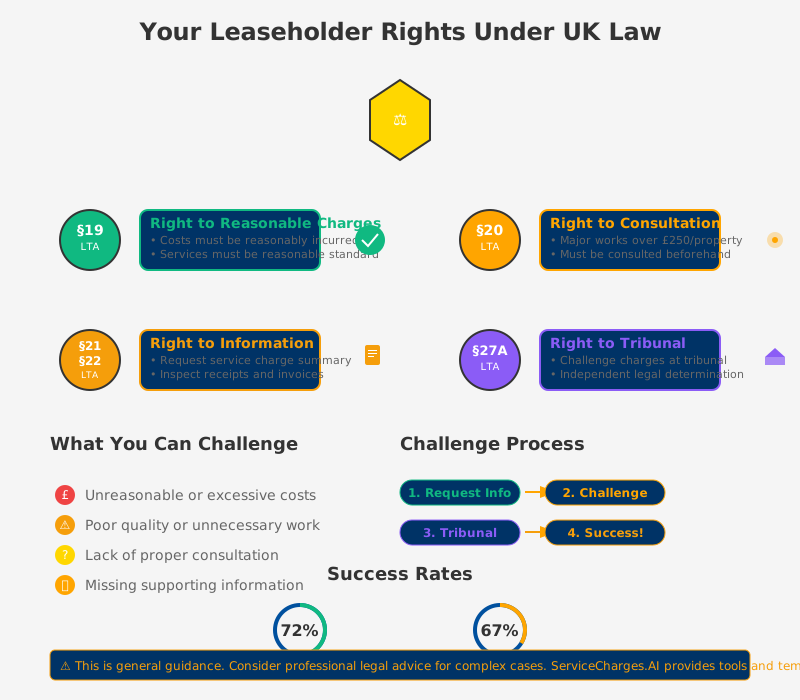
Complete visual guide to your rights under the Landlord and Tenant Act 1985 and related legislation
1. Service Charges Overview
Service charges are payments that leaseholders make to cover the costs of running, maintaining, and repairing a building and any communal areas. If your lease allows for service charges, you are legally obligated to pay them - but only if they are reasonable and properly incurred.
What Service Charges Typically Cover
- Building maintenance: Repairs to the structure, roof, external walls, windows, lifts
- Communal services: Cleaning, gardening, lighting of shared areas
- Utilities: Heating, hot water, electricity for common areas
- Management costs: Managing agent fees, insurance premiums
- Major works: Large one-off expenses like roof replacements, external decorations
- Reserve funds: Money set aside for future major works
2. Legal Framework
Your rights as a leaseholder are primarily protected by several key pieces of legislation:
Landlord and Tenant Act 1985
This is the main law governing service charges in England and Wales:
- Section 19: Service charges must be reasonably incurred and for services of a reasonable standard
- Section 20: Consultation requirements for major works over £250 per leaseholder
- Sections 21 & 22: Your right to demand information about service charges
Commonhold and Leasehold Reform Act 2002
Provides additional protections including:
- Right to manage (RTM) for leaseholders to take over management
- Right of first refusal when the freehold is sold
- Enhanced rights to challenge administration charges
Leasehold Reform (Ground Rent) Act 2022
Restricts ground rents on new leases to a peppercorn (effectively £0).
Key Legal Principle
The law is on your side: charges must be reasonable, work must be to a reasonable standard, and proper consultation must occur for major works.
3. Your Rights as a Leaseholder
Right to Reasonable Charges (Section 19)
This is your strongest protection. Service charges must be:
- Reasonably incurred: The cost must be reasonable and necessary
- Reasonable standard: Work must be carried out to an acceptable standard
- Genuine costs: Charges must reflect actual costs incurred
Right to Information (Sections 21 & 22)
You have the right to:
- Request a written summary of service charge accounts
- Inspect receipts, invoices, contracts, and other documents
- Take copies of relevant documents
- Challenge any refusal to provide information
Right to Consultation (Section 20)
For major works costing more than £250 per leaseholder, you must be:
- Consulted before work begins
- Given opportunity to comment on proposals
- Allowed to nominate contractors
- Provided with detailed cost estimates
Right to Challenge
You can challenge service charges at the First-tier Tribunal (Property Chamber) if you believe they are unreasonable.
💡 Important: You Usually Must "Pay Now, Challenge Later"
In most cases, you must continue paying service charges while challenging them. Withholding payment can lead to forfeiture proceedings against your lease.
4. What You Can Challenge
Unreasonable Costs
- Inflated charges: Costs significantly above market rate
- Unnecessary work: Repairs or improvements that weren't needed
- Poor quality work: Work that doesn't meet reasonable standards
- Excessive management fees: Fees disproportionate to services provided
Lack of Consultation
- Major works over £250 per leaseholder without proper Section 20 consultation
- Failure to follow the consultation procedure correctly
- Not giving leaseholders adequate time to respond
Incorrect Apportionment
- Being charged more than your fair share as specified in the lease
- Charges for services you don't receive
- Charges for areas you can't access or don't benefit from
Lack of Transparency
- Vague or unclear invoicing
- Refusal to provide supporting documentation
- Hidden charges or unexpected fees
Administration Charges
Separate from service charges, administration charges (like fees for license applications) must also be reasonable and included in your lease.
⚠️ Time Limits
You generally have 18 months from receiving a service charge demand to challenge it at tribunal. Don't delay if you suspect overcharging.
5. Section 20 Consultation Rights
Section 20 consultation is required for any works costing more than £250 per leaseholder. The process has specific stages and timeframes.
The Consultation Process
Stage 1: Notice of Intention
- Landlord must describe the works in general terms
- State reasons why works are necessary
- Invite leaseholders to make observations within 30 days
- Allow leaseholders to nominate contractors
Stage 2: Estimates
- At least two estimates must be obtained
- One estimate must be from a contractor nominated by leaseholders (if any)
- Estimates must be provided to leaseholders
- Leaseholders have 30 days to comment
Stage 3: Award of Contract
- Landlord selects contractor and begins work
- Must notify leaseholders of contractor selected and reasons
Consequences of Non-Compliance
If consultation requirements aren't met, leaseholders' liability is limited to £250 per property unless the landlord gets dispensation from the tribunal.
Your Rights During Consultation
- Make observations about necessity and scope of works
- Nominate contractors for estimates
- Comment on estimates received
- Challenge the selection of contractors
- Request additional information about proposed works
6. Demanding Information
You have strong legal rights to information about your service charges. Use these rights to understand what you're paying for and identify potential overcharging.
Section 21 - Service Charge Summary
You can request a written summary showing:
- Total amount received for service charges
- How money was spent
- Details of services provided
- Any money held in reserve or sinking funds
Section 22 - Right to Inspect Documents
After receiving a summary, you can inspect and take copies of:
- Receipts for expenditure
- Invoices and bills
- Contracts for works or services
- Insurance policies and certificates
- Any other relevant documents
How to Make a Request
Sample Information Request
"I request, under Section 21 of the Landlord and Tenant Act 1985, a written summary of the service charges for [property address] for the period [dates]. Please provide this within 21 days as required by law."
Enforcement
If your request is ignored:
- Send a follow-up letter referring to the legal requirement
- You may not be required to pay service charges until information is provided
- Apply to the tribunal for an order compelling disclosure
- The landlord may be liable for your costs
7. How to Challenge Charges
Step 1: Gather Information
- Use your Section 21/22 rights to get all relevant documents
- Analyze costs and compare with market rates
- Check if proper consultation procedures were followed
- Identify specific issues with the charges
Step 2: Raise Concerns Informally
- Contact the landlord or managing agent in writing
- Clearly explain your concerns with evidence
- Request adjustments or explanations
- Keep records of all correspondence
Step 3: Formal Dispute Resolution
If informal approaches fail:
- Ombudsman: If the landlord is a member of a property ombudsman scheme
- Mediation: Some areas offer mediation services
- Tribunal: Apply to the First-tier Tribunal (Property Chamber)
Before Going to Tribunal
⚠️ Consider the Costs and Risks
- Tribunal fees: Currently £100-£200 for most applications
- Legal costs: You may need professional representation
- Time commitment: Tribunal cases can take 6-12 months
- Risk: If you lose, you may be ordered to pay the other side's costs
8. First-tier Tribunal Process
The First-tier Tribunal (Property Chamber) is an independent judicial body that resolves disputes between landlords and leaseholders.
What the Tribunal Can Decide
- Whether service charges are reasonable
- Whether consultation requirements were met
- The appropriate amount payable for works or services
- Whether administration charges are reasonable
- Disputes about major works and qualifying long-term agreements
Making an Application
Required Information
- Completed application form
- Copy of your lease
- Service charge demands and accounts
- Correspondence with the landlord
- Evidence supporting your case
- Application fee (currently £100-£200)
The Tribunal Hearing
- Preparation: Submit your evidence bundle at least 5 days before hearing
- Attendance: You can attend in person or send a representative
- Evidence: Present your case with supporting documents
- Cross-examination: You may question the landlord's witnesses
- Decision: Tribunal issues a written determination
Possible Outcomes
- Charges reduced: Tribunal finds some charges unreasonable
- Charges confirmed: Tribunal finds charges are reasonable
- Mixed decision: Some charges allowed, others disallowed
- Costs order: Tribunal may order one party to pay the other's costs
9. Getting Professional Help
Free Resources
- Leasehold Advisory Service (LEASE): Free government-funded advice service
- Citizens Advice: General advice on housing and legal issues
- Local authority: Some councils offer leasehold advice services
Professional Services
- Solicitors: Legal advice and representation
- Chartered surveyors: Technical assessment of works and costs
- Property management consultants: Analysis of management practices
- Leasehold valuation tribunal representatives: Specialist tribunal representation
When to Seek Professional Help
- Large sums of money involved (typically £5,000+)
- Complex technical issues
- Multiple leaseholders joining together
- Landlord has professional representation
- Risk of lease forfeiture
Ready to Check Your Service Charges?
Use our AI-powered analysis to identify potential overcharging and understand what you can challenge.
Join Our WaitlistTake Control of Your Service Charges Today
Don't pay more than you should. Our AI analysis can identify potential savings and help you understand your rights.
Join Our Waitlist